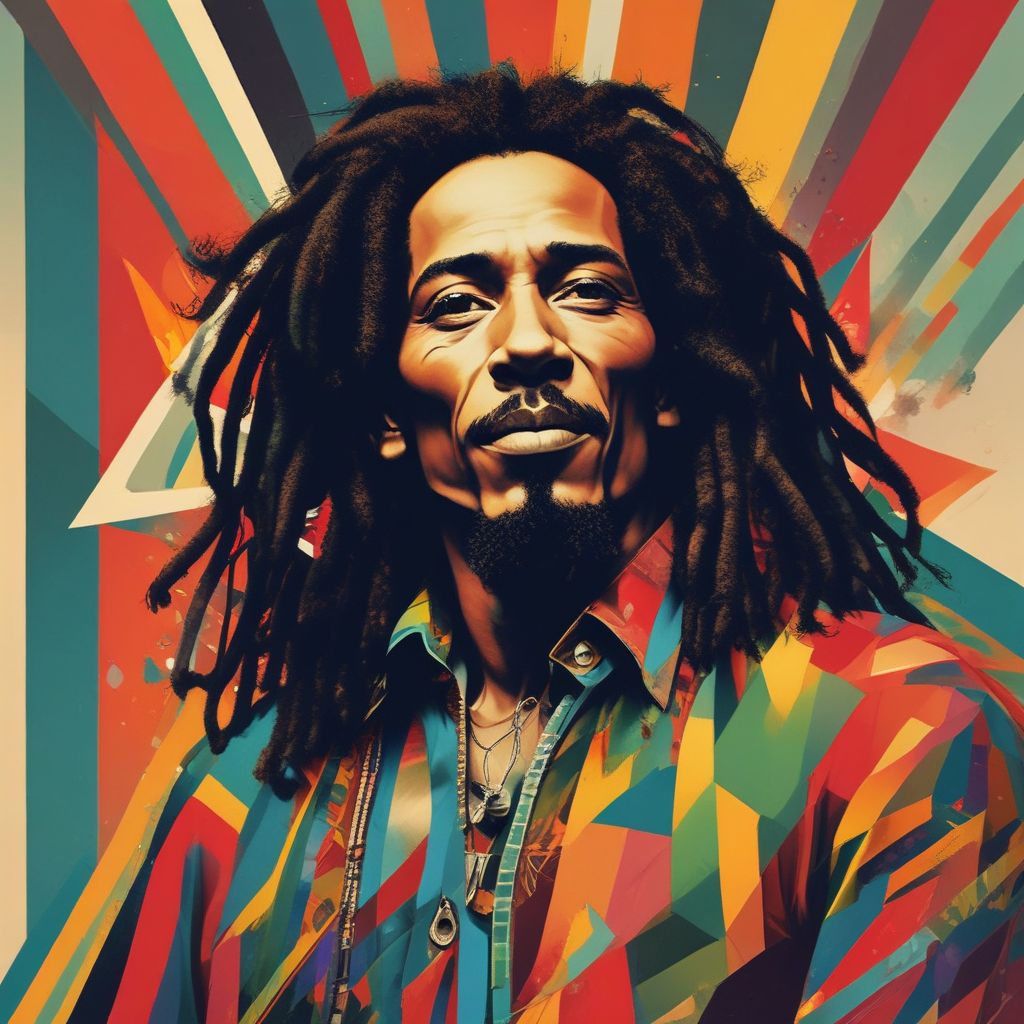
Bob Marley is often distilled into commercial slogans, but this framing flattens the substance of his work. His catalog systematically engaged politics, spirituality, and social critique, addressing structural poverty, colonial history, institutional racism, political violence, and personal freedom. These themes arose directly from the material and cultural realities of post-colonial Jamaica, where economic stratification and political rivalry shaped everyday life.
This article aims to distinguish documented facts from interpretive narratives. Marley was a significant artist but not a prophet, and his lyrics should not be misconstrued as precise predictions of future events. By keeping the line between observation and prophecy clear, we can appreciate his art without inflating it into myth.
Early Life and Context
Robert Nesta Marley was born in 1945 in Nine Mile, Jamaica, and spent part of his childhood in Kingston's Trench Town. Jamaica gained independence from the United Kingdom in 1962, a period marked by political competition between the Jamaica Labour Party and the People's National Party. This backdrop shaped the social milieu of Marley's music, even though it doesn't account for every song he wrote; the turbulence of that era supplied both the urgency and the language that would later echo in his verses. He started recording with Peter Tosh and Bunny Wailer in the early 1960s. The Wailers' early ska and rocksteady recordings gradually evolved into reggae music, infused with a strong Rastafari influence, and that evolution reflected a broader shift in Jamaican culture from upbeat dance rhythms to a deeper, bass‑driven sound that could carry weighty messages.
Music as Social Commentary
Songs like "Them Belly Full (But We Hungry)," "Babylon System," "Zimbabwe," "Ambush in the Night," and "Redemption Song" tackle themes of hunger, oppression, liberation, violence, and mental freedom. Other songs are more personal, devotional, or romantic.
"Redemption Song," released on Uprising in 1980, is frequently interpreted as a call to resist mental oppression. "Get Up, Stand Up," co‑written with Peter Tosh, directly demands political and personal agency. These interpretations are grounded in the lyrics and context, but they do not suggest that Marley predicted specific events. The songs’ power lies in their invitation to listeners to examine their own constraints, not in any prophetic claim.
Albums Worth Hearing in Context
- Natty Dread (1974) blends social critique with roots reggae and songs of community. Its title track, for example, declares a readiness to confront injustice while celebrating cultural pride.
- Exodus (1977) brought international recognition while maintaining spiritual and political themes. The album’s opening anthem, “One Love/People Get Ready,” unites a universal call for unity with a distinctly Jamaican rhythm.
- Survival (1979) emphasizes African unity, colonial history, and liberation. Tracks such as “Africa Unite” explicitly link Caribbean identity to a broader Pan‑African consciousness.
- Uprising (1980) includes "Could You Be Loved," "Forever Loving Jah," and "Redemption Song." The juxtaposition of danceable grooves with reflective lyrics illustrates Marley’s ability to embed messages within popular forms.
- Confrontation (1983) was released posthumously, featuring previously unreleased material. The songs reveal unfinished ideas that continue his dialogue on resistance.
The posthumous compilation Legend (1984) introduced many listeners to Marley, but it is a greatest‑hits collection rather than a comprehensive representation of his work. Relying solely on that album risks flattening the nuanced political and spiritual layers present in his deeper cuts.
Politics and the 1976 Attack
Marley was involved in Jamaican political and social causes, though he wasn't merely a spokesperson for one party. In December 1976, he, his wife Rita, manager Don Taylor, and others were shot at Marley's house before the Smile Jamaica concert. Marley survived and performed at the concert two days later. The motives and responsibility behind the attack have been widely debated, and claims that it was definitively ordered by a particular group should be approached with caution. The ambiguity reflects the fraught partisan climate of the time, where musicians could become inadvertent targets in power struggles.
In 1978, Marley participated in the One Love Peace Concert, where he brought Jamaica's rival political leaders, Michael Manley and Edward Seaga, together on stage. This gesture became symbolic, but it did not resolve Jamaica's ongoing political conflicts. The image of the two men holding hands endures because it showed how music could momentarily bridge entrenched divisions, even if the underlying disputes persisted.
Rastafari and Humanitarian Work
Rastafari deeply influenced Marley's language, imagery, and historical understanding. It is crucial to describe this tradition on its own terms rather than reducing it to a commercial aesthetic. Marley also supported causes related to African liberation and participated in benefit concerts, such as the 1979 UNICEF benefit for the people of Africa and the 1979 Amandla Festival. By lending his voice to these events, he turned his platform into a conduit for raising awareness and funds, demonstrating that his artistic mission extended beyond the studio.
His public image eventually became a global brand. This commercial success made his music accessible to a wider audience, but compilations, advertising, and tourist culture can obscure the political and religious context of his work. When a T‑shirt bears his likeness without reference to Rastafari or the struggles he sang about, the original message risks being diluted.
Illness and Death
In 1977, a lesion under Marley's toenail was diagnosed as acral lentiginous melanoma. He initially refused amputation for religious and personal reasons and later had tissue removed. The cancer eventually spread. Marley died in Miami on May 11, 1981, at the age of 36. His premature death halted a prolific career, leaving a body of work that fans continue to unpack decades later.
There is no credible evidence that his cancer was intentionally planted or that his death was an assassination. These claims are conspiracy theories, not established facts. Accepting the medical record preserves the integrity of the narrative.
What the Legacy Means
Marley integrated accessible melodic structures with themes of systemic justice, Rastafari faith, dignity, and resistance. Engaging the catalog beyond the posthumous greatest-hits canon reveals a repertoire substantially more politically assertive and structurally diverse than popular commercial framing suggests. The enduring cultural influence of his recordings derives from their capacity to articulate collective struggles for autonomy within grounded historical and political contexts.
The relevant question is not whether Marley predicted every present crisis, but why songs about inequality, power, and solidarity continue to resonate, and how carefully we should distinguish enduring themes from specific factual claims.
Comments (0)
Please sign in to leave a comment